Safety First: Engineering Trustworthy Robots for people
Safety in home robotics isn't one switch you flip at the end of a build. It has to be considered at every single stage, from motor selection to software response times, long before a robot ever reaches a customer's home.
Layers of Protection
Force-limited joints that stop on unexpected contact
Redundant sensors so no single failure goes unnoticed
Conservative default behavior in unfamiliar situations
Physical safeguards that work even if the software fails entirely
Choosing Caution Over Confidence
When a situation is ambiguous, we'd always rather the robot slow down, pause, or stop entirely than push forward on an assumption that might be wrong. That bias toward caution shapes decisions at every level of the system, not just the physical hardware.
“We'd rather a robot pause and ask than guess and get it wrong.”
That cautious-by-default approach has shaped nearly every safety decision we've made, and it's a principle we're not willing to compromise on, even when it means a robot moves a little slower than it technically could.
We also treat every safety-related report from a household as a priority signal, regardless of how minor it seems, since the small near-misses are usually where the most important lessons about a robot's behavior are hiding.
DISCOVER
Discover updates
Stay informed with the newest developments and advancements from our team.

Designing a Robot People Can Trust
Building robots that feel safe, reliable, and trustworthy requires thoughtful design, transparency, and human-centered engineering.
Allen Radley
-
Head of Product Design
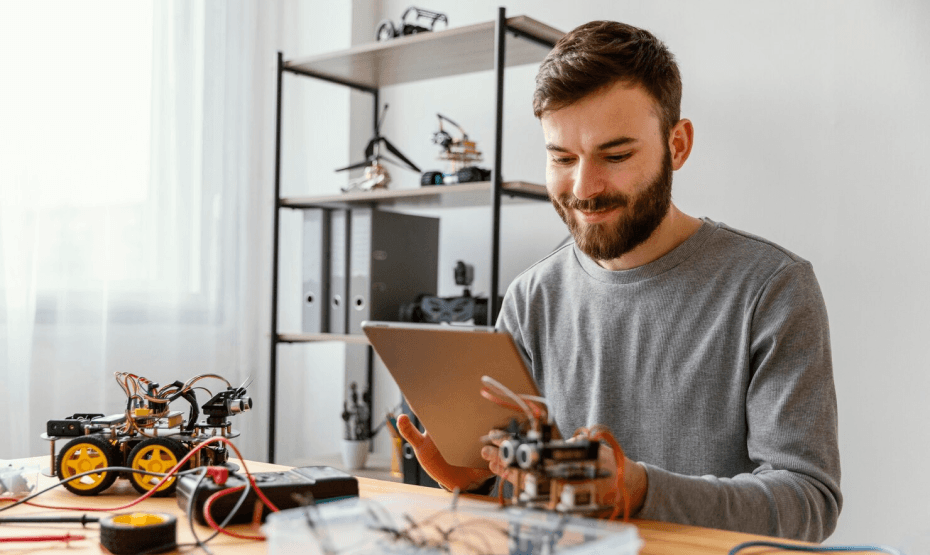
Designing a Home Robot for Real Life and real work
How modern approaches make robots work seamlessly in real homes by focusing on safety, usability, and everyday practicality.
Alex Reynolds
-
Senior Product Designer