Measuring What Matters: Tracking Real Impact at Home
It's easy to demo a robot in a controlled setting. It's much harder to prove it's genuinely useful once it's living in someone's actual home, with actual mess, noise, and interruptions that no demo script accounts for.
The Metrics We Actually Track
Time saved per week compared to self-reported baselines
Task completion rate across real households, not lab conditions
How often a task needs manual correction
Long-term usage after the first month, not just day one
How often a household actively seeks out new tasks for the robot
Why Long-Term Data Matters Most
Early enthusiasm is easy to generate with a new gadget. What's much harder, and far more telling, is whether a household is still relying on the robot for real tasks after the novelty has worn off completely.
The last metric matters most. A lot of home tech gets used once and forgotten. We care far more about whether a robot is still earning its place in a home six months in, because that's the point where genuine usefulness is the only thing keeping it in the routine.
DISCOVER
Discover updates
Stay informed with the newest developments and advancements from our team.

Designing a Robot People Can Trust
Building robots that feel safe, reliable, and trustworthy requires thoughtful design, transparency, and human-centered engineering.
Allen Radley
-
Head of Product Design
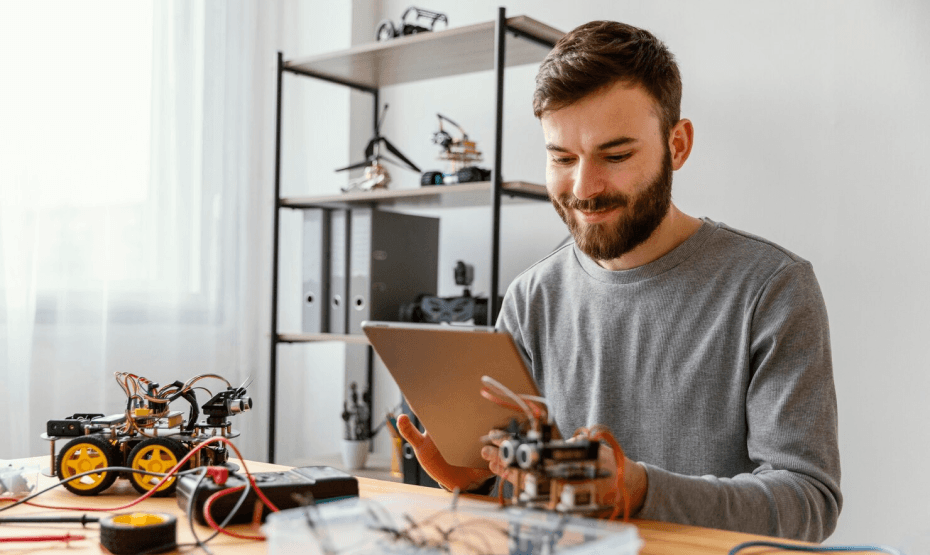
Designing a Home Robot for Real Life and real work
How modern approaches make robots work seamlessly in real homes by focusing on safety, usability, and everyday practicality.
Alex Reynolds
-
Senior Product Designer