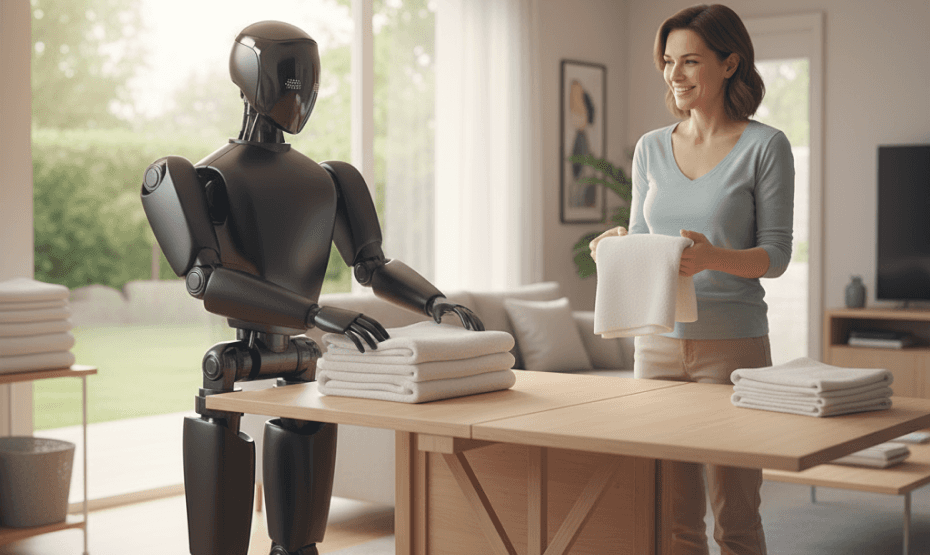
How Intelligent Robots Learn Your Daily Routine
A home robot's first week looks nothing like its third month. In the beginning, it's simply observing, cautious and a little slow to react. By the time it's settled in, it should feel like it already knows your home almost as well as you do.
Learning Without Being Intrusive
Our systems build a picture of daily routines using on-device sensors rather than constant cloud processing. This keeps response times fast and keeps sensitive data close to home, instead of relying on a round trip to a distant server for every small decision.

What Patterns Actually Look Like
Over time, the robot recognizes patterns like when the kitchen gets busy, when the house is empty, and when a routine has quietly changed, such as a new work-from-home schedule or a child starting a different after-school activity. It adjusts its help accordingly, without needing to be told twice.
This is what separates a genuinely adaptive home robot from a simple scheduled device. It isn't just repeating the same actions at the same times. It's continuously checking whether its assumptions still match the life actually happening around it, and updating quietly when they don't.
DISCOVER
Discover updates
Stay informed with the newest developments and advancements from our team.

Designing a Robot People Can Trust
Building robots that feel safe, reliable, and trustworthy requires thoughtful design, transparency, and human-centered engineering.
Allen Radley
-
Head of Product Design

Designing a Home Robot for Real Life and real work
How modern approaches make robots work seamlessly in real homes by focusing on safety, usability, and everyday practicality.
Alex Reynolds
-
Senior Product Designer